Dance
Rajasthan’s dances bring together rhythm, costume, storytelling and movement—from Kalbelia and Bhavai to Teratali and other living traditions.
Kalbelia Dance
The Kalbelia dance is a vibrant and energetic folk dance from the Thar Desert of Rajasthan, India, performed by the nomadic Kalbelia community.
Key Features
- Serpentine Movements: Female dancers swirl and move in fluid, acrobatic ways that mimic the graceful sway of a cobra.
- Traditional Costumes: Dancers wear flowing, tiered black skirts (ghagra) and embroidered tops adorned with mirrors and silver threads.
- Live Music: Men accompany the dance using traditional instruments like the woodwind pungi (or been) and percussion instruments like the khanjari and dholak.
- UNESCO Recognition: UNESCO added the folk songs and dances of the Kalbelia to its Intangible Cultural Heritage list in 2010.
Bhavai Dance
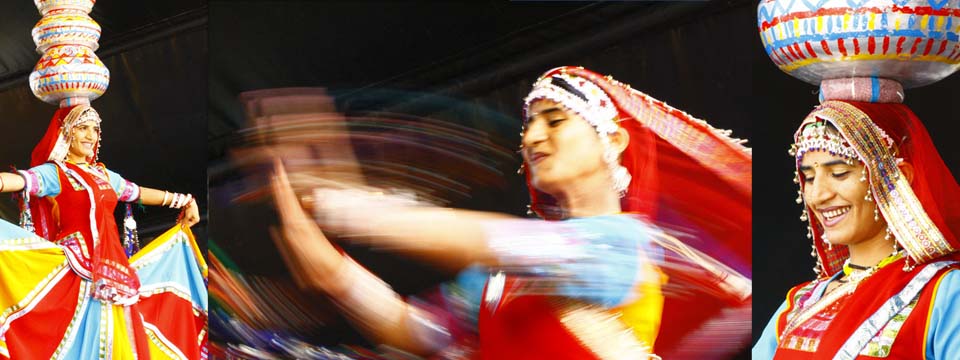
Bhavai is a thrilling and traditional folk dance from the state of Rajasthan in India, famous for its dangerous balancing acts and graceful movements.
Key Features of Bhavai Dance
- Balancing Acts: Performers balance a stack of 7 to 22 earthen or brass pots on their heads while dancing.
- Stunt Elements: Dancers sway, twirl, and pirouette while perched on narrow or sharp objects, such as the edge of a sword, the rim of a brass plate (thali), glass bottles, or broken glass.
- Musical Accompaniment: Male musicians support the performance by singing melodious folk songs and playing traditional instruments like the dholak, pakhawaj, sarangi, and harmonium.
- Origin and Communities: The dance is rooted in the tribal and rural traditions of Rajasthan—particularly performed by communities like the Jat, Bhil, Meena, and Kalbelia—and is inspired by women balancing water vessels over long desert distances.
Teratal Dance
Teratali (or Terah Taali) is a traditional devotional folk dance originating from the Kamar tribe in Rajasthan and Madhya Pradesh.
Key Features
- Name Origin: “Terah” means thirteen, named after the 13 manjiras (small metal cymbals) tied to various parts of the body.
- Placement of Cymbals: Dancers tie 9 cymbals on their right leg, 2 on their elbows, and hold 1 in each hand to strike intricate rhythms.
- Posture: Performers mostly sit or squat on the ground while executing the rhythmic movements.
- Props: Dancers often balance decorated pots on their heads or hold a small sword between their teeth while playing the cymbals.
- Devotion: It is performed in honor of the folk deity Baba Ramdevji, accompanied by singing and instruments like the chautara or manjiras played by male companions.
Ghoomar Dance
Ghoomar is a traditional folk dance from the Indian state of Rajasthan characterized by graceful twirling movements and vibrant traditional attire.
Origins and History
- Created by the Bhil tribe to worship Goddess Saraswati.
- Later embraced and popularized by the Rajput royal families.
- Performed primarily by women on auspicious occasions like weddings and festivals.
Key Features and Attire
- Dancers wear a long, flared skirt known as a ghaghara along with a head veil.
- The central movement is ghoomna, a circular twirling motion that creates a whirling effect with the skirt.
- Dancers move in synchronized clockwise and anti-clockwise steps while clapping or snapping fingers.
Gair Dance
Gair is a traditional folk dance from Rajasthan, India, performed mainly by the Bhil community during festivals like Holi.
Key Details
- Performers: Mostly men from the Bhil tribe, though other communities in Mewar and Marwar also take part.
- Movement: Dancers move in large circles, stepping and hopping in sync while striking wooden sticks (called khanda or dand) or swords together.
- Instruments: Performances are accompanied by traditional instruments like the dhol, nagada, dholak, and flute.
- Occasions: Celebrated primarily during Holi and Janmashtami to welcome joy and community bonding.
Chakri Dance
Chakri dance is a fast-paced traditional folk dance from the Hadoti region of Rajasthan, India, performed primarily by women of the Kanjar tribe.
Key Details
- Origin: The Ministry of Culture, Government of India notes that the dance originated among the Kanjar tribe women in the Baran, Kota, and Bundi districts of the Hadoti region.
- Name Meaning: The word chakri comes from the Hindi word chakkar, which means circle. This describes the fast, continuous spinning movements performed by the dancers.
- Performance Style: Women wear wide, colorful skirts (ghagharas) and spin rapidly in back-to-back formations, creating a fluid wheel-like visual effect.
- Occasions: It is traditionally performed during weddings, community festivals, and celebratory gatherings.
Mayur Dance
Mayur dance, also known as the Peacock Dance, is a traditional folk dance from the Braj region of Uttar Pradesh that celebrates the divine love between Lord Krishna and Radha.
Origin and Story
- Braj Region: The dance is deeply rooted in towns like Mathura and Vrindavan in Uttar Pradesh.
- The Legend: According to local folklore, Radha was once missing Krishna and sought comfort by watching peacocks at the Mor Kuti pavilion. Krishna made the peacocks vanish to tease her, but later transformed into a peacock himself to dance with her.
Costumes and Performance
- Attire: Dancers wear multi-colored costumes decorated with vibrant peacock feathers.
- Movements: Performers mimic the graceful, sweeping movements and joyful dancing of peacocks, especially during the monsoon season.
- Music: The performance is accompanied by traditional folk instruments like the dholak and tabla.
Chari Dance
Chari dance is a traditional folk dance from the Indian state of Rajasthan, particularly prominent in the Ajmer and Kishangarh regions and performed by the Gujjar and Saini communities.
Overview and Meaning
- Origin: Rooted in rural Rajasthan, representing the daily struggle of women walking long distances to fetch water.
- Occasions: Performed during joyous events like weddings, the birth of a male child, and cultural festivals.
- Alternative Name: Known as a “welcome dance” or a traditional fire dance.
Performance and Costume
- The Pot (Chari): Dancers balance brass or earthenware pots on their heads without using their hands.
- Fire Element: The pots contain lit oil lamps (diya) or cotton seeds soaked in oil, creating glowing patterns in the dark.
- Attire: Women wear vibrant traditional Rajasthani clothes like ghaghra choli and heavy traditional jewelry such as hansli and timniya.
- Instruments: Accompanied by traditional instruments like the dholak, nagada, harmonium, and bankia.
Kachhi Ghodi
The Kachhi Ghodi dance is a highly energetic and theatrical folk dance originating from the Shekhawati region of Rajasthan, India. Its name translates to “Dummy Mare” or “Dummy Horse,” named after the beautifully decorated framework worn around the dancer’s waist to create the illusion of riding a horse.
Tradition
- This traditional art form vividly reflects the valour, chivalry, and martial traditions of Rajasthan’s historic warrior and bandit clans.